India with its 1,464 million inhabitants is the world’s fastest-growing economy. The International Monetary Fund (IMF) forecasts for India a gross domestic product (GDP) of nearly USD 4.2 trillion in 2025/26 and expects an economic growth of 6.6% in the fiscal year (FY) 2026/27. Since wires, tubes and their derivates such as cables, springs, fasteners and pipe fittings are everywhere needed, India creates a vast market for their producers and their suppliers. That’s why the industry is looking eagerly forward to the trade fairs wire India and Tube India in Mumbai from November 30 to December 2, 2026.
Wires and cables
Wires and cables are essential for the supply of electric power and electronic data. In May 2026, the market research company MR Marked Wide Research valued the Indian wire and cable market at USD 18.7 billion in 2026 expecting it to expand to nearly USD 42 billion by 2035, advancing at a compound annual growth rate (CAGR) of 9.40%.
India is experiencing a significant transformation caused by a continuing rapid urbanization, the development in the infrastructure including smart power transmission networks, the increasing number of power plants generating electricity from renewable sources, the construction of data centers for artificial intelligence (AI) applications and digital connectivity, the adoption of electric vehicles, the industrial automation, the use of electrical household appliances as well as air conditioning (HVAC) systems. All of these systems require huge quantities of wires and cables to function. And this also applies to the railroad sector. The state-owned enterprise Indian Railways plays a pivotal role in the country’s infrastructure operating one of the world’s largest rail networks and realizing ambitious high-speed rail programs. According to the professional association Chamber of Railway Industries, the country’s rail network has been expanded to a length of 69,439 km, with a further extension of 3,500 km targeted during the FY 2026. By October 2025, more than 99% of the railway network had been electrified. This nearly 100% electrification is expected to deliver long-term benefits in energy efficiency, operational cost reduction and environmental sustainability.
The market research company Grand View Research found out that the Indian railroad market generated a revenue of nearly USD 7.3 billion in 2025 and is expected to reach more than USD 15 billion by 2033 growing at a CAGR of 9.6% from 2026 to 2033 (Fig. 1).
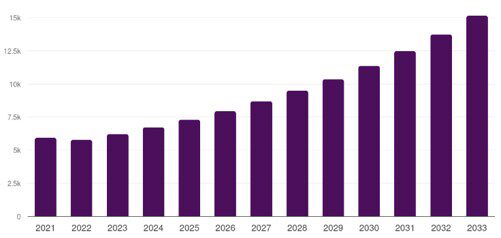
Fig. 1. Development of India’s railroad market.
y-axis: Market size (in USD million) / x-axis: Period of time (the figures for 2026 to 2033 are forecast values)
Source: https://www.grandviewresearch.com/horizon/outlook/railroad-market/india
Tubes and pipes
Tubes and pipes made from various materials are essential for many technical systems to function. The terms “tubes” and “pipes” are used interchangeably but there are technical differences. Tubes are mainly used for mechanical structures and can have various cross-sections, while pipes are primarily used for the transmission of substances such as gases, liquids, slurries, or free-flowing solids like pellets and powders. According to a report of the market research company Expert Market Research updated in July 2026, the Indian pipes market reached a value of more than USD 16 billion in 2025 and should reach USD 46.3 billion by 2035 increasing at a CAGR of 11.20% during the period of 2026-2035.
The Jal Jeevan Mission, envisioned to provide drinking water to all households in rural India, and the AMRUT 2.0 mission to make India’s cities water-secure create a large-scale demand for water supply and sewerage pipes. The rapid urbanization and the construction sector are also expanding the pipe demand, agricultural irrigation projects require extensive plastic pipe networks, also the growing industrial infrastructure, and the renewable energy and the hydrogen sectors. A significant market for tubes are motorcycles as their core is a frame made of tubes. Two-wheelers driven by an internal combustion engine (ICE) or by an electric drive are the primary mode of personal transportation for more than 200 million Indian households and a critical tool for commercial logistics, food delivery and ride-hailing operations. India’s two-wheeler industry is thus a big contributor to its economy, generating direct and indirect employment for over 35 million people across manufacturing, dealership networks and aftermarket services. The market research company Marqstats values India’s two-wheeler market at more than USD 29 billion in 2025 and expects it to reach USD 43 billion by 2030 at 7.82% CAGR. Scooters reached 35% volume share in the FY 2025. Furthermore, Electric two-wheelers crossed 1.4 million units in the FY 2026 with 6.54% market penetration, compared to 6.09% in the FY 2025 (Fig. 2).
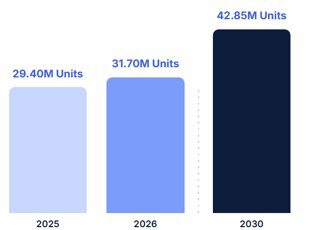
Fig. 2. Market size of India’s two-wheeler market.
y-axis: Market size (in million units) / x-axis: Period of time (the figures for 2026 to 2030 are forecast values)
Source: https://marqstats.com/reports/india-two-wheeler-market/
Outlook
In view of increasingly challenging market requirements, wire, cable and tube manufacturers in India need technologically up-to-date equipment to remain competitive. The wire India and Tube India trade fairs provide the optimum opportunity for suppliers to show their innovations while visitors get access to information about the state-of-the-art.
wire India & Tube India 2026: A huge and diverse market for the wire, cable and tube industries