From AI and data centres to offshore wind, defence and aerospace, where could the next generation of wire and cable demand come from?
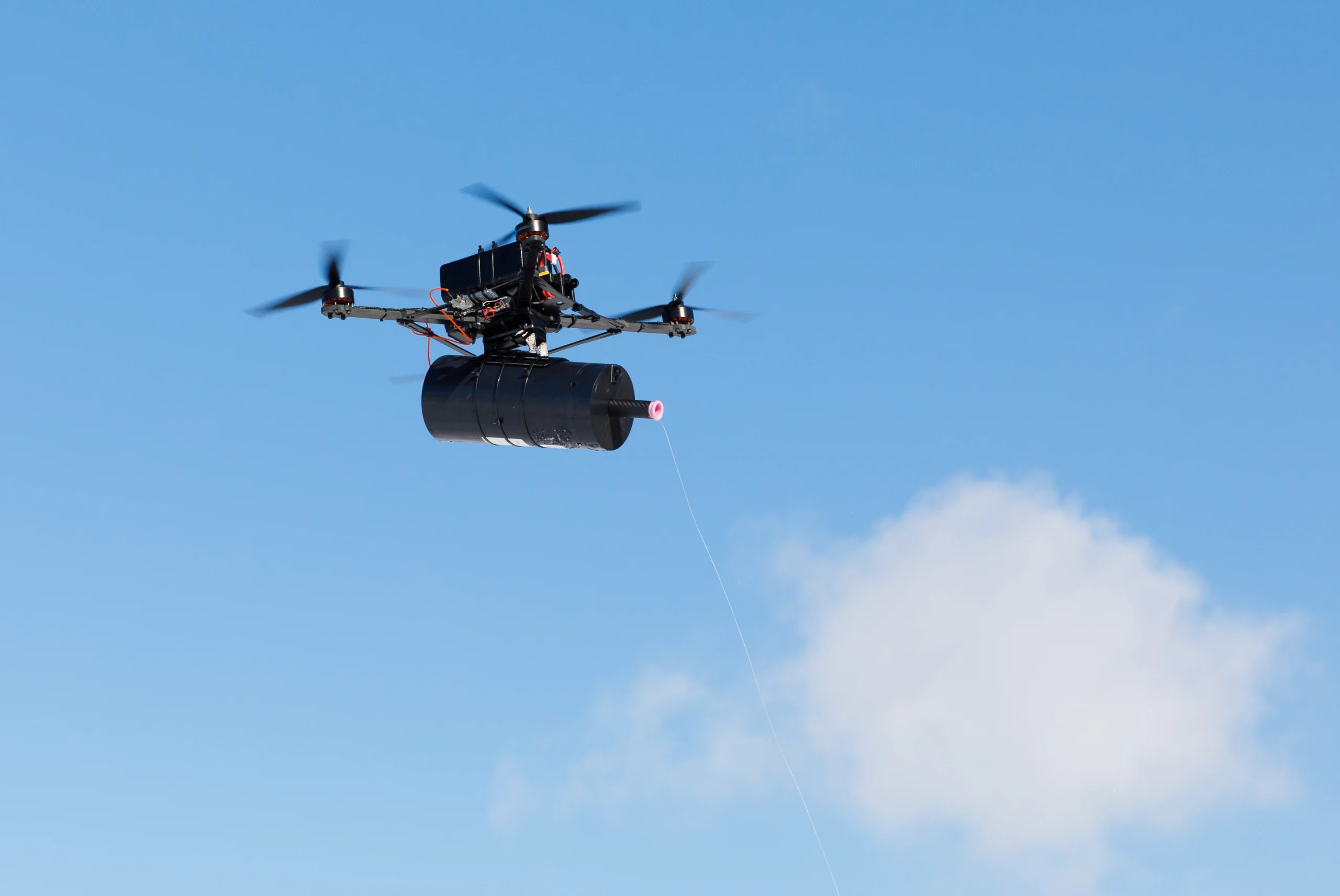
A drone flies over a battlefield in Ukraine carrying a spool of fibre-optic cable. In a data centre, engineers are planning for server racks with power requirements that would have seemed extraordinary only a few years ago. In North Wales, work is progressing towards a new generation of nuclear reactors. Across Europe, governments are looking at how to strengthen electricity networks, energy security and domestic manufacturing.
These projects have little in common on the surface. Yet each depends on technologies that sit firmly within the wire and cable industry’s world: conductors, fibre, insulation, connectors and the machinery required to manufacture them.
The interesting question is not whether these industries will use wire and cable. They already do. It is where the next significant demand will come from, and whether the products required will look very different from those being manufactured today.
Some of the answers are already beginning to emerge.
AI’s very physical problem
Artificial intelligence is usually presented as a software story. The headlines focus on models, chips and computing power. Behind that digital infrastructure, however, sits a very physical problem: electricity.
The International Energy Agency estimates that data centres consumed around 415 TWh of electricity globally in 2024, with consumption expected to more than double to around 945 TWh by 2030 in its base case.
For the cable industry, the more useful question is what that electricity demand means in physical terms.
A data centre needs power distribution from the grid to the facility, internal distribution through switchgear and UPS systems, connections to racks and equipment, and extensive cooling infrastructure. In its April 2026 Global Cable Outlook, CRU estimated that one gigawatt of installed data-centre capacity represents around 24,000 tonnes of copper cable and 7,000 tonnes of aluminium cable conductors.
CRU estimated that data centres accounted for 1.6% of global cable demand in 2025, compared with 0.5% in 2020, and forecast that share reaching 3.8% by 2030. It forecast data-centre cable demand to grow at around 22.4% CAGR between 2024 and 2030.
The implications go beyond volume. As AI systems become more powerful, higher power densities are putting greater demands on distribution, cooling and reliability, while high-speed computing is also changing the balance between copper and optical connectivity.
The industry’s challenge may therefore be less about finding demand and more about delivering against it. At CRU’s Wire & Cable Connections Summit in June, the discussion focused increasingly on skilled labour, raw materials, manufacturing capacity and infrastructure as potential constraints on growth.
The opportunity created by AI is not necessarily simply “more cable”. It could mean different cable, different materials, different specifications and different production technologies.
Where the growth is coming from
AI is only one part of a much broader change taking place across the cable market.
CRU’s April 2026 Global Cable Outlook forecast global cable demand associated with HV subsea cable to grow at 25.1% CAGR between 2024 and 2030, data centres at 22.4%, solar PV at 18.9%, electric vehicles at 8.0% and HV land cable at 6.9%.
These are forecasts rather than guarantees, but they indicate where some of the strongest demand could emerge.
The common factor is electrification.
New renewable generation needs to be connected to the grid. Data centres need enormous amounts of reliable power. Electric vehicles require high-voltage systems and charging infrastructure. Offshore wind needs subsea connections. Grid expansion requires high-voltage and extra-high-voltage systems.
For manufacturers, the challenge is increasingly one of technical capability as well as production volume.
China sits at the centre
This is where the story comes back to China.
China already has enormous manufacturing capacity in the cable sector. CRU estimates that the country accounts for 52% of global land-cable manufacturing capacity and 60% of subsea cable capacity.
But China’s significance is not simply its ability to manufacture cable. It is also a major market for many of the technologies driving future demand.
China’s economy grew 4.7% in the first half of 2026, although the performance varied significantly between sectors and regions. Advanced manufacturing has been an increasingly important source of growth as the country tries to reduce its reliance on property and traditional investment.
The latest trade figures illustrate the shift. China’s wire and cable exports reached 1.85 million tonnes in the first seven months of 2026, up 9.26% year on year. Copper wire and cable exports rose even faster, increasing 15.44% over the same period.
At the same time, State Grid is continuing to invest heavily in the infrastructure required to support China’s growing electricity demand. It completed more than RMB 310 billion of fixed-asset investment in the first half of 2026, up 12.6% year on year, including investment in transmission networks, urban and rural grids and renewable-energy integration.
Several major ultra-high-voltage transmission projects entered operation or construction during the first half of the year.
For the cable industry, the significance is clear. China is simultaneously a major producer, a major consumer and an increasingly important exporter.
A changing global market
The geography of China’s cable exports is changing too.
CRU data shows that Southeast Asia accounted for 23% of China’s insulated-cable exports in 2025, up from 15% in 2015. Africa’s share increased from 7% to 11%. Over the same period, North America’s share fell from 20% to 10%, while Northeast Asia declined from 22% to 12%.
That shift reflects the growing importance of emerging markets, where electricity networks, industrial capacity and infrastructure are expanding.
It also comes at a time when China’s domestic economy is uneven. Property and construction remain under pressure, while advanced manufacturing and exports are becoming increasingly important sources of growth. For Chinese cable manufacturers, that combination creates an incentive to look beyond the domestic market.
For European manufacturers, meanwhile, the competitive landscape is changing in a different way.
The European Commission’s Clean Industrial Deal is designed to mobilise more than €100 billion to support European clean manufacturing, while the EU is increasingly linking industrial policy with energy security, resilience and strategic dependencies.
European cable manufacturers are also investing in capacity. At CRU’s June 2026 summit, Europacable highlighted around €4 billion of investment that could more than double European HV and EHV cable production and installation capacity by 2030.
The result is an industry being shaped by two forces at once: rapidly growing global demand and a much more strategic discussion about where critical infrastructure should be manufactured.
Subsea cable shows where the market is heading
Subsea cable provides a useful example of how China’s manufacturing capability is increasingly becoming part of the international market.
China is already a major subsea cable market, with manufacturers including Ningbo Orient Cable, ZTT and Hengtong supplying the country’s large offshore-wind sector. Orient Cable’s own project portfolio includes the Pentland Firth East interconnector in the UK and the Baltica 2 offshore wind farm in Poland.
Orient Cable is also supplying the 220 kV export cable for the Inch Cape offshore wind farm in Scotland. The first section of the project’s second export cable was manufactured by Orient Cable and, at 2,000 mm², is among the largest AC export cables in the world. The three sections were installed in June 2026.
These are not simply examples of Chinese cable being exported into another market. They illustrate Chinese manufacturers participating in technically demanding European projects where certification, engineering, project experience and the ability to deliver at scale all matter.
Europe is simultaneously investing in its own cable manufacturing capacity. At CRU’s June 2026 Wire & Cable Connections Summit, Europacable highlighted around €4 billion of investment that could more than double European HV and EHV cable production and installation capacity by 2030.
The result is an increasingly international market in which manufacturers are competing not just on price, but on technology, capacity, certification, project experience and security of supply.
That is a very different competitive environment from simply selling cable from one country into another.
When the cable becomes the technology
Defence provides perhaps the most unexpected example of how new applications can emerge.
The UK’s Defence Investment Plan commits £298 billion over four years, including more than £5 billion for drones and autonomous systems. Across Europe, governments are also increasing defence spending and looking at how to rebuild industrial capacity.
Ukraine has demonstrated how quickly relatively inexpensive drones can evolve and how important communications, sensors and electronic warfare have become.
One development in particular brings the cable industry directly into the story.
Fibre-optic drones carry a spool of cable which unspools as the aircraft flies. Instead of relying entirely on a radio connection, the drone maintains a physical link to its operator.
The attraction is clear. A conventional radio-controlled drone can be disrupted by electronic warfare. A fibre-optic connection does not depend on a radio signal and cannot be jammed in the same way.
The engineering challenge is considerable. The cable has to be extremely light, strong enough to survive deployment and capable of maintaining signal integrity over the required distance.
CRU’s recent optical-fibre analysis identifies fibre-tethered drones as an emerging application contributing to fibre demand, alongside AI infrastructure and other new applications.
For manufacturers, this is an unusual proposition. The cable is not simply hidden inside the finished product. Its characteristics can directly influence the operating range and effectiveness of the system.
It is too early to know whether fibre-tethered drones will become a major commercial cable market. But the technology demonstrates how quickly an unexpected application can create a new set of engineering requirements.
Fibre, aerospace and the next specification
The role of fibre is also expanding beyond communications.
In August 2026, the UK and Ukraine announced a new AI defence partnership. One of the projects under the partnership will use buried fibre-optic cables as AI-enabled sensors, with potential applications for protecting military sites and, in future, infrastructure such as airports, railways and energy facilities.
The cable itself becomes part of the sensing system.
It is a small but telling example of how established technologies can acquire completely new applications.
Aerospace presents a similar challenge, although the problem there is often weight.
Airbus is leading LEIA, the Large Scale Integration Demonstrator of Hybrid Electrical Architecture, a European programme focused on high-voltage generation and distribution for future short- to medium-range aircraft.
The question is straightforward:
How do you carry more power and data without adding unnecessary weight?
That means lightweight conductors, specialist alloys, advanced insulation, thermal management and increasingly demanding requirements around reliability and electromagnetic performance.
These may never become the industry’s largest-volume markets. They could, however, be among its most technically demanding.
What should the industry be watching?
The common thread running through these developments is that the next wire and cable opportunity may not arrive looking like a wire and cable opportunity.
The company building an AI data centre is thinking about computing capacity and electricity. A wind developer is thinking about generation and grid connection. A defence contractor is thinking about autonomous systems. An aircraft manufacturer is thinking about weight and propulsion.
The requirement for cable may sit several layers down the supply chain.
That makes early engagement increasingly important. What materials will the application require? What specifications are likely to emerge? Which components are currently too heavy, too expensive or not reliable enough?
These are questions that cable manufacturers are well placed to answer, but only if they are involved early enough.
And this is where exhibitions have an important role to play.
See the next generation at wire China
For visitors to wire China 2026, these developments provide a useful lens through which to view the exhibition.
Look beyond the individual machine and ask what problem it is solving.
How much more automated is the production process? How is data being used to improve quality? What is changing in high-voltage manufacturing? Which companies are developing specialist materials? Where are fibre and optical technologies moving? What are manufacturers doing to make production more efficient, flexible and intelligent?
The answers may provide a better indication of where the industry is heading than any single product announcement.
China remains one of the world’s most important manufacturing bases for wire and cable, but the story is no longer exclusively about China. Europe is investing in grids, clean technologies and manufacturing capacity. Governments are reassessing supply-chain resilience. Defence requirements are changing. AI is creating entirely new demands for electricity and connectivity.
The result is an industry facing a rare combination of strong demand, technological change, geopolitical pressure and questions about manufacturing capacity.
The companies best placed to benefit may not simply be those making the most cable.
They may be the ones that understand what the world is going to need it for next.