
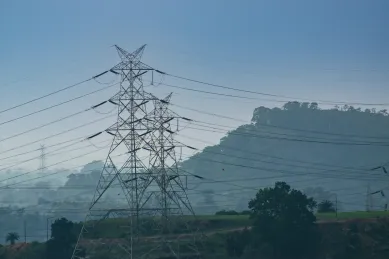

From major investment in electricity networks and renewable energy to the rapid expansion of data centres, India is entering a significant period of infrastructure development. These changes are creating new opportunities for the wire and cable industry, with demand extending across manufacturing, materials, machinery and technology.
India is emerging as one of the most significant growth markets for the global wire and cable industry. Rapid urbanisation, industrial expansion, rising electricity consumption and digital transformation are driving substantial investment across the country’s infrastructure and energy sectors. For wire and cable manufacturers and machinery suppliers, the convergence of these developments presents an important opportunity, with the Indian market forecast to grow substantially over the coming years.
According to research by InCred Equities, India’s wire and cable market is projected to increase from approximately ₹1.1 lakh crore in FY2026 to ₹1.7 lakh crore by FY2030, representing annual growth of around 12%. Unlike previous periods of expansion, which were often driven by individual sectors, this growth is being supported by several areas of investment simultaneously, including electricity transmission, renewable energy, data centres, electric vehicles and construction.
A major contributor is India’s ambitious programme to expand and modernise its electricity infrastructure. As industrial activity increases and more households and businesses require reliable power, the pressure on existing transmission and distribution networks continues to grow. The Government’s National Electricity Plan anticipates peak electricity demand reaching 388 GW by 2032, requiring a substantial expansion of the national grid. India’s transmission network is planned to increase from approximately 509,000 circuit kilometres in June 2026 to 648,000 circuit kilometres by 2032, while transformation capacity is expected to rise from 1,478 GVA to 2,345 GVA.
The scale of this investment is considerable. The National Electricity Plan provides for the addition of 191,474 circuit kilometres of transmission lines over the ten-year period from 2022–23 to 2031–32, with the overall transmission plan carrying an estimated cost of approximately ₹9.15 lakh crore. For the wire and cable industry, this translates into significant potential demand for overhead conductors, high-voltage and extra-high-voltage cables, copper and aluminium products, and the specialist machinery required to manufacture them. The expansion of substations and the modernisation of existing networks will also create demand for associated electrical components and equipment.
Alongside this grid expansion, India’s transition towards cleaner energy is creating another important source of growth. The country has set a target of achieving 500 GW of installed non-fossil fuel electricity capacity by 2030, encompassing solar, wind, hydro, nuclear and other non-fossil sources. The Government is progressing towards this ambition through substantial investment in renewable generation and the infrastructure needed to connect it to the national grid.
However, generating renewable electricity is only part of the challenge. Many solar and wind projects are located away from major centres of consumption, making the development of new transmission corridors and grid connections essential to transporting electricity efficiently. The Government’s transmission planning therefore includes infrastructure to integrate more than 500 GW of non-fossil fuel capacity by 2030, alongside the development of Green Energy Corridors.
This will require significant quantities of high-performance conductors, specialist power cables and high-voltage transmission technology. Battery storage and grid modernisation will also become increasingly important as the proportion of electricity generated from variable renewable sources increases. For manufacturers, the shift towards more sophisticated energy infrastructure presents opportunities to develop higher-specification products and invest in the production technologies needed to meet increasingly demanding requirements.
A further area attracting significant investment is India’s rapidly expanding digital economy. The growth of artificial intelligence, cloud computing and data consumption is driving demand for large-scale data centre facilities, bringing a new dimension to the country’s electricity and infrastructure requirements. According to CRISIL Ratings, India’s third-party colocation data centre capacity is expected to increase fivefold to approximately 7.5 GW by March 2030, attracting investment of more than ₹3 lakh crore over the four financial years to that date.
This expansion has important implications for the wire and cable sector. Data centres require extensive electrical distribution systems, high-capacity power cables, copper conductors, busbars and specialist connectivity infrastructure. Increasing computing demands, particularly from artificial intelligence applications, are also placing greater emphasis on power reliability, efficiency and advanced cooling systems. The infrastructure required to support these facilities will therefore extend beyond the buildings themselves, creating additional demand for grid connections, substations and associated electrical equipment. However, access to sufficient electricity and timely grid connections will be critical to ensuring that planned developments can progress at the pace anticipated.
The combined effect of these developments is creating a diverse and increasingly sophisticated market for wire and cable products. Demand is expected to extend from traditional building wires and power distribution cables to extra-high-voltage products, renewable energy cabling, specialist industrial applications and the infrastructure supporting digital connectivity. This is also influencing investment decisions within India’s manufacturing sector, with producers looking to expand capacity, improve efficiency and develop higher-value products.
For machinery manufacturers and technology providers, the opportunities are equally significant. Increased production requirements and more complex product specifications will place greater emphasis on modern wire drawing lines, extrusion technology, stranding equipment, insulation systems and advanced testing solutions. Manufacturers will also need to consider automation, energy efficiency and production quality as competition increases and customers demand more specialised products.
There are, however, challenges to consider. The pace of infrastructure development will depend on the timely delivery of major projects, access to raw materials, investment in manufacturing capacity and the ability of the electricity network to keep pace with new demand. Volatility in copper and aluminium prices, alongside project delays and increasing competition, could also influence the industry’s growth.
Nevertheless, the underlying direction is clear. India’s expanding power network, non-fossil energy ambitions and rapidly developing digital infrastructure are creating several interconnected sources of demand that are expected to support the wire and cable market well into the next decade. For international manufacturers, suppliers and technology providers, the opportunity lies not only in supplying products to this growing market, but also in supporting the development of the manufacturing capabilities and infrastructure needed to deliver India’s ambitions.
As India continues to invest in the foundations of its industrial and digital future, the wire and cable industry will have an increasingly important role in connecting it.
SIDEBAR – India: The Numbers Behind the Opportunity
₹1.7 lakh crore
Wire and cable market
Projected market value by FY2030, up from ₹1.1 lakh crore in FY2026.
12%
Annual market growth
Projected compound annual growth rate for India’s wire and cable sector to FY2030.
648,000 km
Electricity transmission network
Planned expansion of India’s transmission network by 2032, from 509,000 km in June 2026.
500 GW
Clean energy ambition
India’s target for installed non-fossil fuel electricity capacity by 2030.
7.5 GW
Data centre capacity by 2030
Expected fivefold increase in installed capacity, supported by more than ₹3 lakh crore of investment over four financial years.
Sources: InCred Equities (reported by Financial Express, July 2026); Ministry of Power, Government of India; Crisil Ratings, November 2026.


