Motivating the Workforce: Building Longevity in the Wire & Cable Industry
07 November 2025
The wire and cable industry is at a crossroads. While demand for products continues to grow, our sector faces a pressing challenge: the workforce of today does not look like […]
The wire and cable industry is at a crossroads. While demand for products continues to grow, our sector faces a pressing challenge: the workforce of today does not look like the workforce of yesterday. For decades, many companies have relied on long-serving employees who built their skills and careers over a lifetime. Now, with a significant proportion of the workforce nearing retirement, the need to attract, motivate, and retain younger generations has never been more urgent.
Understanding the generational shift
Across Europe, 75 percent of manufacturers say they are concerned about an ageing workforce. In the United States, one-quarter of manufacturing workers are already over 55, with the average employee now 44.3 years old compared to 42 across all industries. Just 8 percent of the sector’s workers are under 25. These figures underscore the scale of the generational gap—and the urgency with which companies must prepare.
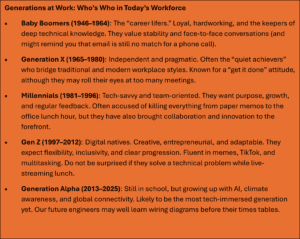
Millennials and Gen Z bring new energy and ideas, but they also have different expectations from their employers. Where previous generations may have valued stability and longevity above all else, younger employees are motivated by purpose, development opportunities, and workplace culture. They want to see how their work contributes to bigger goals, whether that is advancing sustainable technologies, supporting the energy transition, or improving everyday life through connectivity.
Motivation in practice
So how can our industry adapt? First, we need to rethink how we communicate what we do. Our industry is far more than simply producing wire and cable. It is about powering electric vehicles, enabling renewable energy, connecting people across continents, and helping to build smarter, greener infrastructure. Telling this story helps younger employees connect their daily work with something meaningful.
Second, training and career development are essential. In fact, 88 percent of younger workers say professional development and growth opportunities are critical to whether they stay in a role. Yet a recent survey also revealed that 74 percent of Millennials and Gen Z would leave a company if they lacked opportunities for skill development. Offering structured programmes, mentoring from experienced colleagues, and opportunities to attend industry events and technical workshops can make a real difference in retaining talent.
Third, workplace culture matters. Millennials and Gen Z care as much about relationships with colleagues (43 percent), meaningful work (41 percent), and flexibility (38 percent) as they do about pay. Flexible working arrangements, digital tools, and a focus on wellbeing are now expectations rather than perks. A culture of inclusion, recognition, and feedback will engage younger workers in ways that traditional hierarchical management often cannot.
Looking ahead
The truth is clear. Without significant action, the wire and cable industry risks a widening skills gap. Gen Z’s share of the manufacturing workforce has already slipped from 8 percent in 2019 to 7 percent today, despite millions more entering adulthood. But with the right approach, we can turn this challenge into an opportunity. By making our industry’s purpose clear, investing in development, modernising workplace culture, and valuing intergenerational collaboration, we can attract and retain the talent needed to secure the industry’s future.
Longevity in our sector will no longer come from loyalty alone. It will come from creating workplaces where all generations feel motivated, valued, and inspired to grow.