The projects and developments shaping China’s next phase of wire and cable infrastructure
The most revealing developments in China’s wire and cable industry are not always found in production forecasts. Some are easier to spot on project lists, construction sites and shipyards. A RMB 5 billion manufacturing base is taking shape in Wuxi, an 88.8 kilometre ±500 kV submarine cable has been installed in Guangdong, and a new generation of large cable-laying vessels is being prepared for deep-water operations. Other projects remain at the proposal or approval stage.
Together, these developments give a useful view of where investment is going and the types of cable technology and equipment attracting attention. Rather than covering China’s entire infrastructure programme, this article looks at a selection of projects with direct relevance to the wire and cable industry.
Jiangnan Cable’s RMB 5 Billion Manufacturing Base
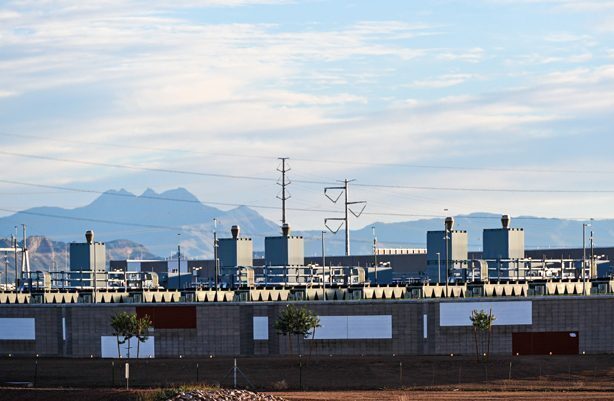
One of the newest major cable manufacturing projects is taking shape in Wuxi. On 17 August, the Wuxi Development and Reform Commission published details of Jiangnan Cable’s Green Power Equipment Intelligent Manufacturing project. The site covers approximately 1,300 mu, or around 87 hectares, with planned investment of RMB 5 billion between 2026 and 2029. RMB 800 million is planned to be invested during 2026.
The scale is significant, but the planned product mix is perhaps more interesting. The project will be developed in four phases and includes dedicated zero-carbon intelligent manufacturing facilities for ultra-high-voltage cable, smart-grid cable, new-energy cable and what the project describes as future-industry cable. The development will also include wire-drawing, extrusion and cross-linking equipment.
This is more than another addition to conventional cable capacity. Jiangnan is building around applications that are expected to require increasingly specialised products. The project is scheduled to run through 2029, so its progress and eventual production start will be important developments for the Chinese cable market.
The investment comes as China begins its 2026 to 2030 five-year planning period. In August, the National Development and Reform Commission and National Energy Administration issued the country’s 15th Five-Year Plan for the construction of a new-type power system. The plan sets out measures to strengthen the electricity network and accommodate a growing share of renewable generation.
For Jiangnan, the more telling detail is what the company has chosen to manufacture. UHV, smart-grid and new-energy cable are all built into the design of the new site.
Yangjiang Qingzhou V and VII
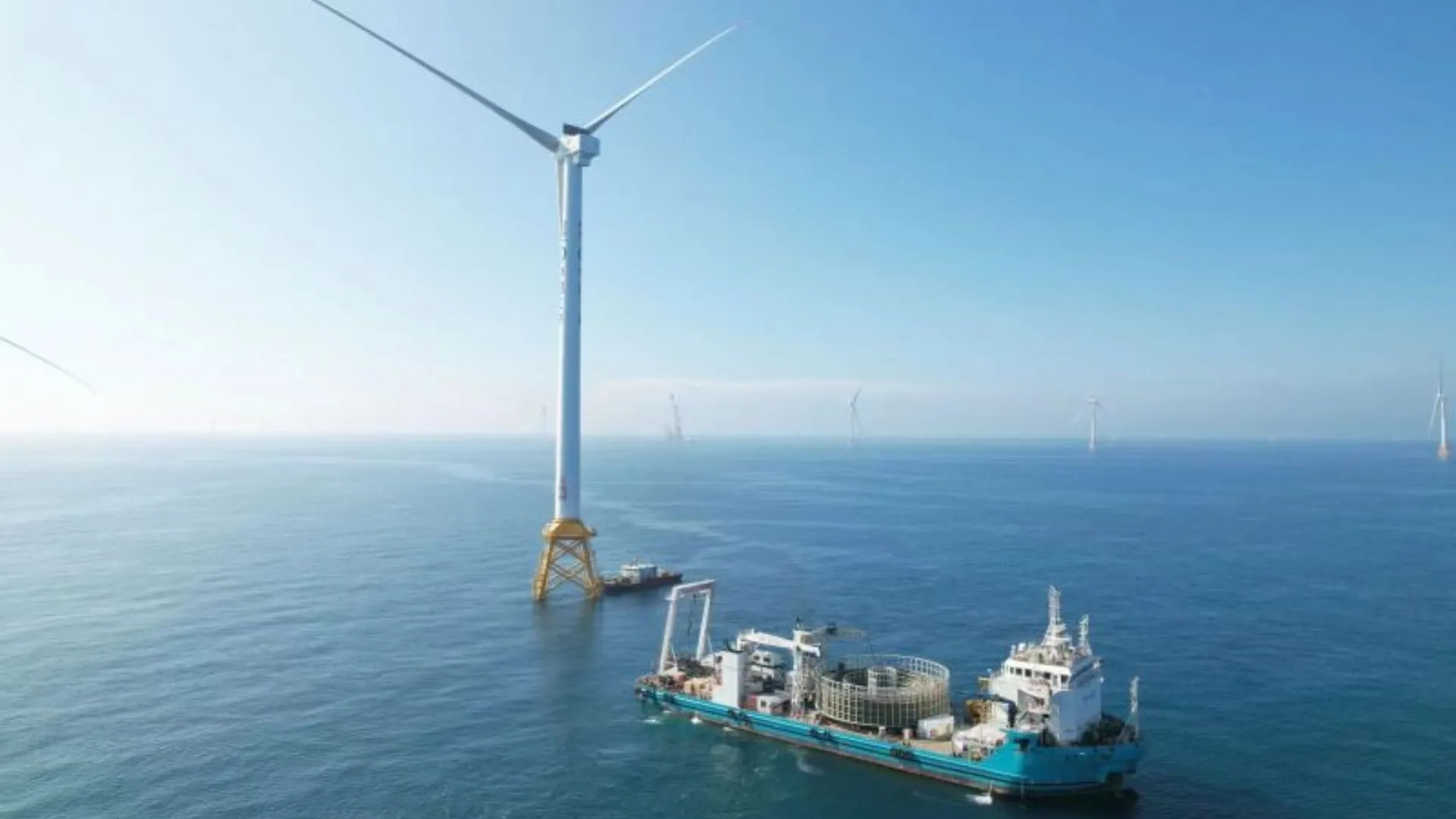
Further south, the focus shifts from manufacturing to offshore transmission. The Yangjiang Qingzhou V and VII offshore wind development in Guangdong has completed installation of an 88.8 kilometre ±500 kV flexible DC submarine cable. China Communications Construction Company describes it as the world’s first ±500 kV flexible DC submarine cable, and says it has been connected to the project’s offshore converter station.
The wider offshore wind development has a total installed capacity of 2 GW and is located up to 90 kilometres offshore, with water depths of between 45 and 53 metres. The Guangdong Electric Power Design Institute describes it as the world’s first offshore wind project to use ±500 kV flexible DC transmission technology.
The project shows the technical demands that come with moving offshore wind further from the coast. Qingzhou combines large-scale generation with high-voltage DC transmission over a long subsea route. That requires specialist cable technology as well as the equipment and expertise needed to install it.
For cable manufacturers, the project is a useful indication of the specification that future Chinese offshore transmission projects could require. Higher transmission capacity, longer routes and more demanding installation conditions all place greater demands on cable design and manufacture.
Blue Sea Navigator
China is also investing in the equipment needed to install subsea cable. On 4 August, the Blue Sea Navigator was launched at Qidong in Jiangsu. Designed by the Marine Design and Research Institute of China and built by Qidong Xiangyu Shipbuilding and Offshore Engineering, the vessel has a full-load displacement of 35,000 tonnes and can carry up to 16,000 tonnes of cable.
The 139.8 metre vessel is designed for deep-sea power infrastructure. It has DP2 dynamic positioning, a dual-channel cable-laying system and a maximum operating depth of 3,000 metres. Its designers say it will be used for high-voltage submarine cable installation for deep-sea wind farms and for transoceanic submarine power cable laying once it has been commissioned.
It is important to distinguish between launch and entry into service. Blue Sea Navigator has been launched, but is not yet operational. The next stages include mooring, commissioning and sea trials before the vessel enters service.
The vessel’s eventual commissioning will be another development to follow. Its size, cable capacity and operating depth point to growing domestic capability for installing large submarine cable systems in deeper water.
China Chile Express
Some of the projects attracting attention are not yet certain to go ahead. The proposed China Chile Express submarine cable is one example.
The project, led by China Mobile International, is intended to establish a direct submarine fibre-optic connection between Chile and Asia. China’s Ministry of Ecology and Environment has approved the environmental impact assessment for the Chinese-controlled S1 section, covering approximately 870.83 kilometres of submarine fibre-optic cable in waters under Chinese jurisdiction. The approval was issued on 29 January 2026.
That approval applies to the Chinese section and should not be confused with approval of the wider international project. The broader China Chile Express remains under evaluation in Chile. On 14 August, China Mobile International met with Chile’s Subsecretariat of Telecommunications to present the project and discuss its progress. The initiative remains under consideration.
The project is therefore one to watch rather than a confirmed new cable order. If it proceeds, it would create another major international application for submarine fibre-optic manufacturing and installation. For now, its final route, timetable and construction remain subject to further approvals.
The Watchlist
Not every development attracting attention in China has reached the point where it can be described as a confirmed project. Some have been discussed by companies, local authorities or industry sources, while approval, financing, procurement or construction details remain unresolved.
The next wave of deep and far-offshore wind projects is one area to follow. Qingzhou has demonstrated the use of ±500 kV flexible DC transmission for a 2 GW offshore wind development located up to 90 kilometres from shore. The launch of Blue Sea Navigator also shows that China is developing the specialist installation capacity needed for deep-water projects. Further developments that reach procurement or construction could create significant demand for high-voltage submarine cable and related equipment, but individual projects should be treated as potential demand until those milestones are reached.
International submarine connectivity is another area where new developments could emerge. The China Chile project shows both the scale of the opportunity and the regulatory and political issues that can affect international cable routes. New proposals should therefore be judged on what has actually happened, including regulatory approvals, financing, procurement and construction, rather than on announcements alone.
There are also likely to be further cable manufacturing investments that have received little international attention. Jiangnan’s Wuxi project is a good example of how a major industrial development can first appear through a local government project announcement. Provincial and municipal project lists may therefore provide useful early indications of where new cable production capacity is being planned.
What Comes Next?
The projects covered here are at very different stages. Jiangnan’s manufacturing base is moving into construction. The Qingzhou project has reached major installation milestones. Blue Sea Navigator has been launched and is moving towards commissioning. China Chile Express remains under evaluation.
That difference in status matters. Announcements can change, projects can be delayed and proposed developments do not always reach construction. Following the milestones is therefore as important as following the headline investment figures.
What is clear from the projects that have moved furthest is that China’s cable industry continues to develop around some demanding areas of the market. New manufacturing capacity is being planned for UHV, smart-grid and new-energy applications. Offshore projects are pushing flexible DC submarine transmission into higher-voltage applications. At the same time, Chinese companies are developing vessels capable of installing large quantities of cable in deep water.
The next few years will show how many of the projects currently on the drawing board make the transition into construction and operation. For the global wire and cable industry, those developments will be worth following because they will show not only where China is adding capacity, but where its manufacturers and engineering companies are developing new capabilities.